How to pack a framed picture or print for shipping
A modern unframed print can travel flat between two boards. A painted canvas, a charcoal drawing and a glazed frame each need different protection. First identify the surface and what can safely come into contact with it.
Go to the packing steps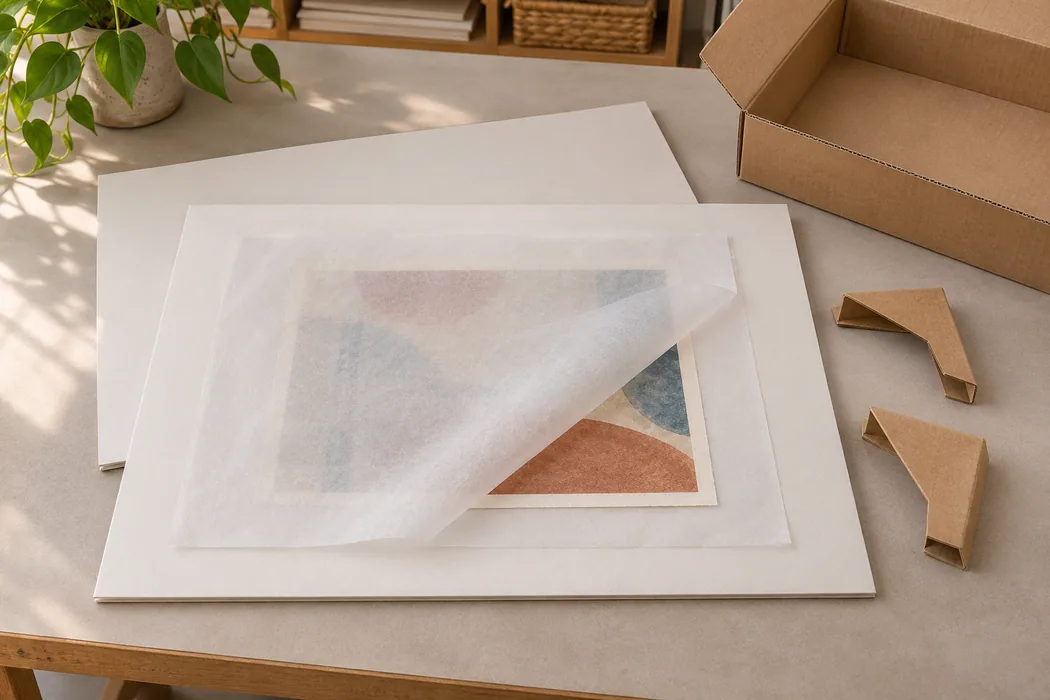
How to pack your parcel
Photograph and measure
Photograph the front, back and corners and record the outside dimensions, including frame depth. Tell us if there is glass or if paint stands proud of the surface.
Check projections at the back
Use a clean work surface suited to the piece. Look for hooks, hanging plates and wire at the back. A hook can pierce a flat package from the inside. Allow protected clearance around protrusions without altering the frame.
Keep the print flat
For a dry, stable print, choose a suitable sleeve and lay the sheet between stiff boards larger than the artwork. Secure the outer margins of the boards, keeping adhesive well away from the sheet.
Consider a tube only for a sheet that can take a curve
A modern poster on flexible paper behaves differently from an old print on stiff paper. If the sheet is creased, has a delicate surface or is already mounted, keep it flat and ask for advice. For a rollable poster, allow for the end caps and usable tube length so the edges do not strike the ends.
Support the frame
Fit corner protectors to the sound sections of a sturdy, smooth frame. If mouldings or gilded decorations project beyond it, show us a detail before fitting anything.
Allow clearance inside the box
Place the protected print or frame in the box with cushioning around the perimeter. Before closing, check that the lid does not bow inwards towards the artwork.
Worked example: an unframed A3 print
This method is for a replaceable print with dry, stable ink. Slide the sheet into a sleeve large enough to avoid friction. Lay it on a board wider than the sheet, centre the second board and secure the two together at the outer margins.
Choose a flat box that leaves room for a cushioned border around both boards. If the boards flex in the middle, use stiffer ones. For a valuable signed print or an unfamiliar medium, send photographs and measurements before touching the surface.
Checks before sealing
- Inspect all four corners before sealing. The outline of the work should stay within the protection, with no corner or ornament carrying the top board's weight directly.
- Mark the opening side and the order in which to remove the boards. The recipient should be able to release tape from the outer edges while keeping blades away from the artwork.
Troubleshooting
Does the glazing move, or is the frame cracked? Keep the work supported and ask about specialist packing. Wrapping film tightly around the frame can press on the glass or decoration without addressing movement inside the frame.