How to pack a parcel
Even a small box of books gets heavy quickly. For a wine glass, the gap between it and the next item matters most. Choose what you want to send to see how to pack it.
Choose what you’re packing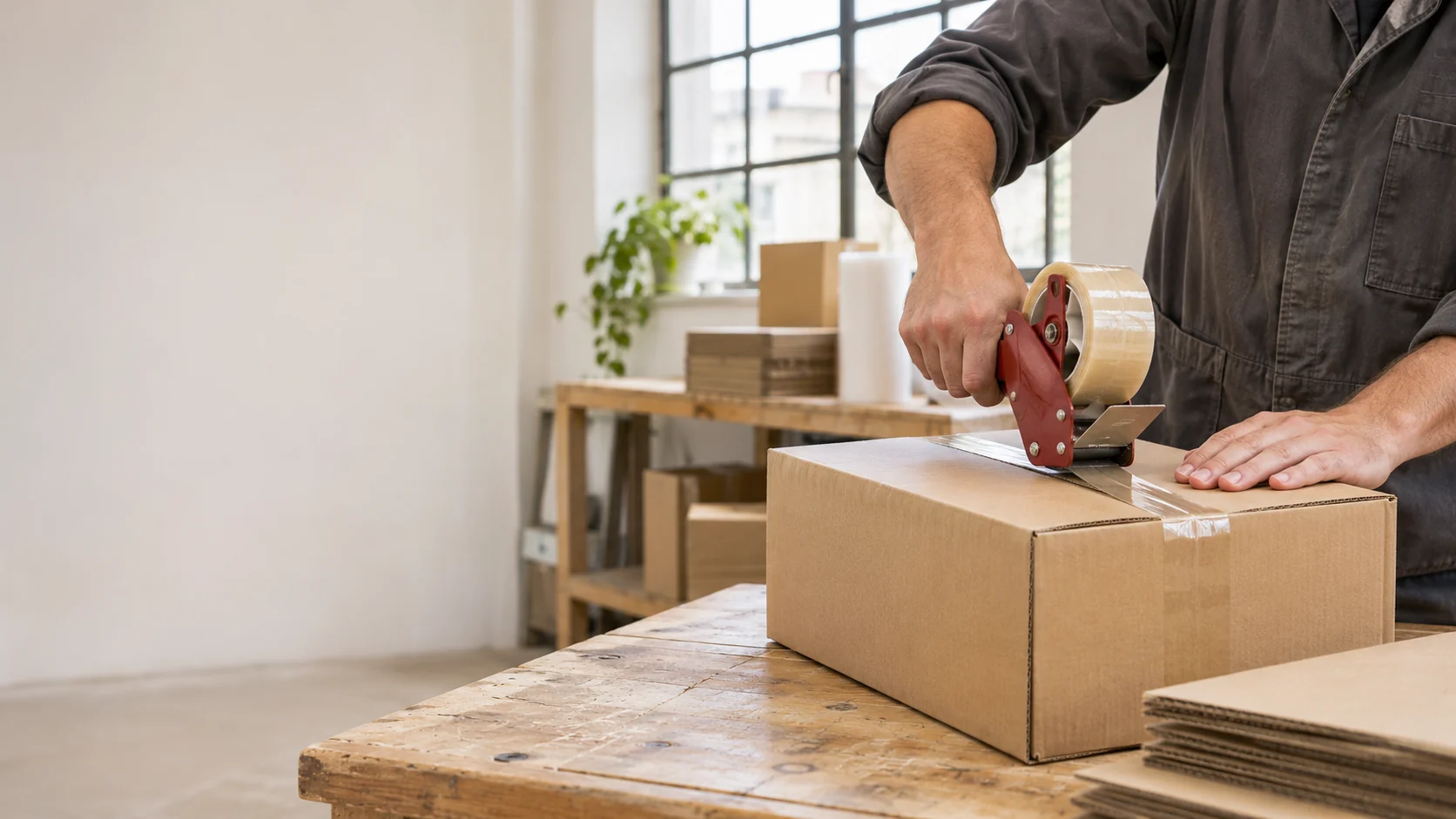
What are you packing?
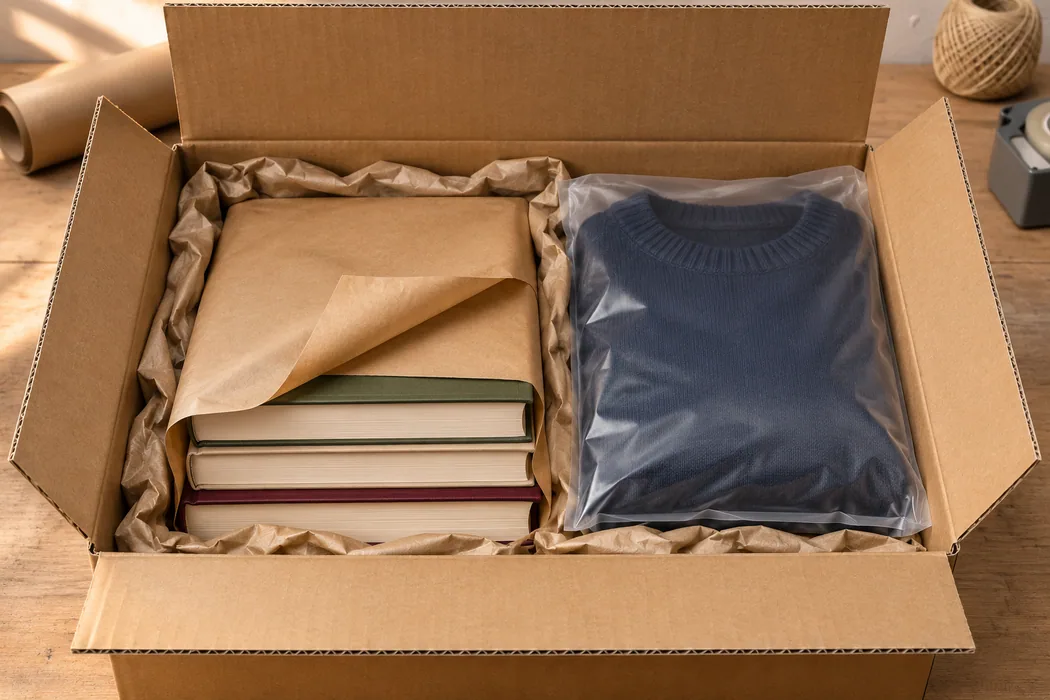
Books and clothing
How to distribute the weight of books, protect covers and pack folded clothes in a box, including for a small move.
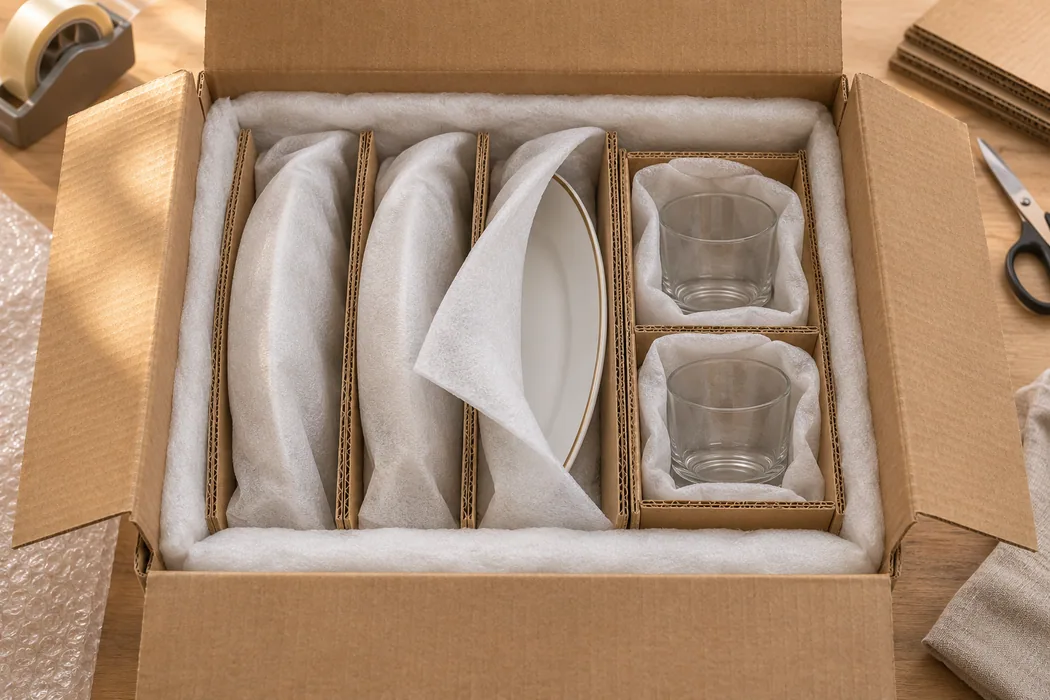
Plates and glassware
Prepare plates, stemware and ceramics for shipping with individual wrapping, dividers and a box suited to your tableware.
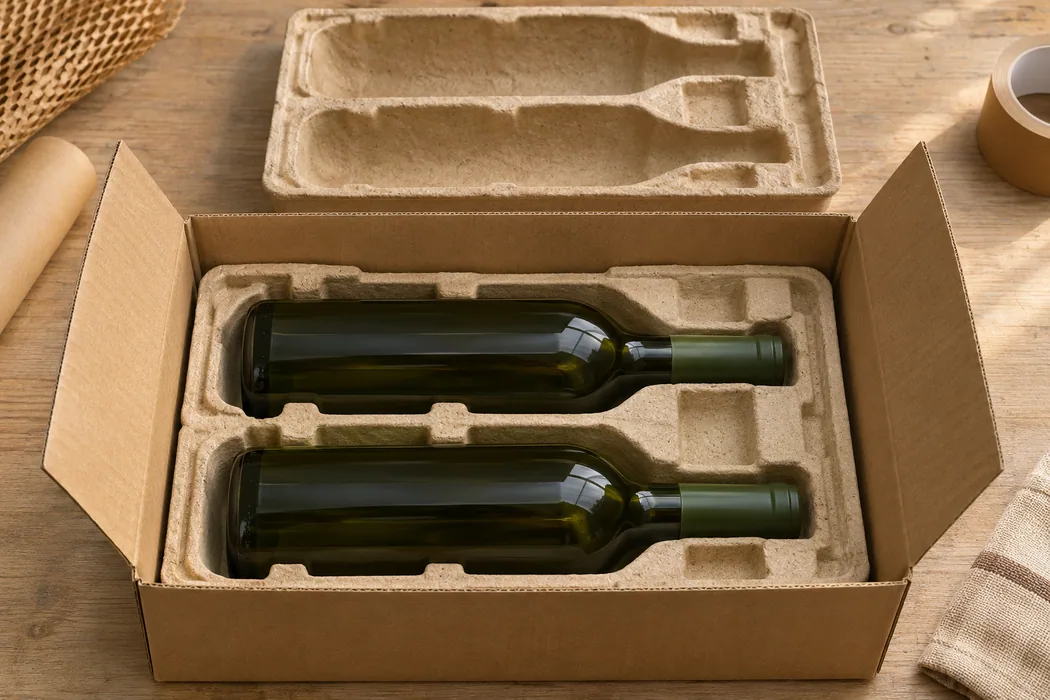
Wine bottles
Choose a shipping kit to fit your wine bottles and check the inserts, closure and destination before bringing the wine to our centre.
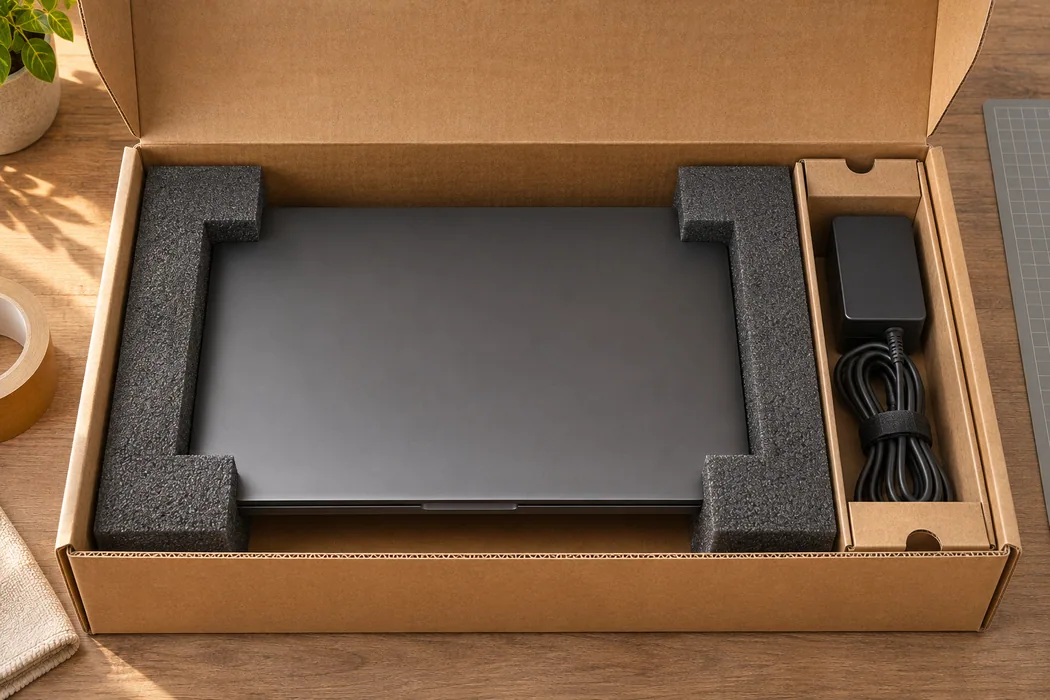
Computers and electronics
Prepare a laptop or electronic device for shipping and protect the screen, corners and power adapter in transit.
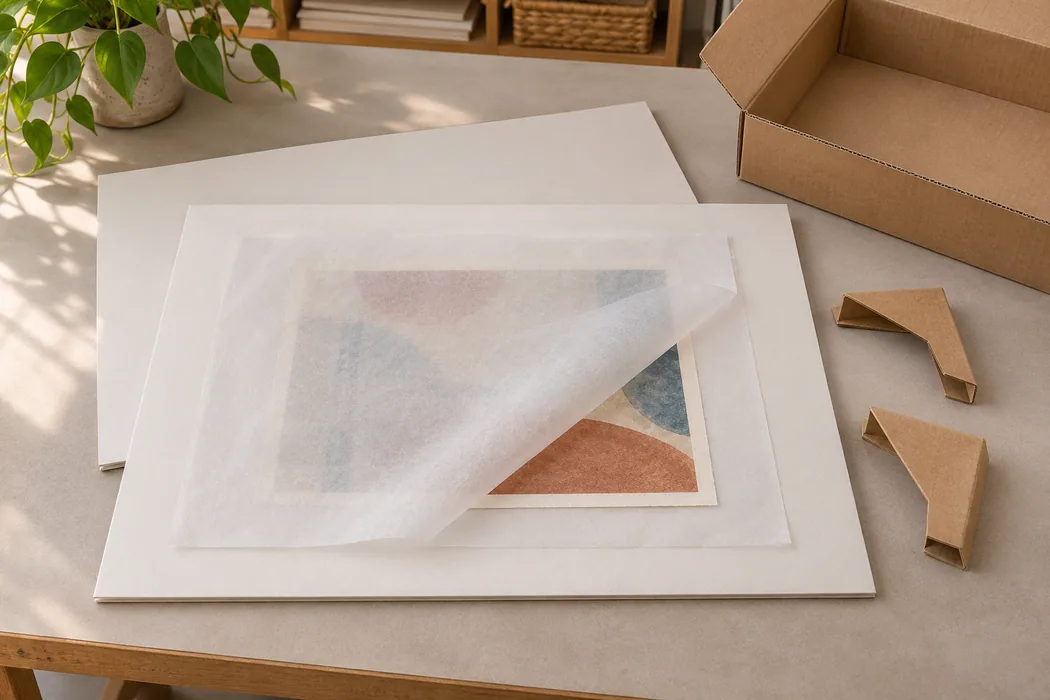
Framed works and prints
Protect a print carried flat, the corners of a frame and the surface of a painting. Find out when to ask about custom packing in Trieste.
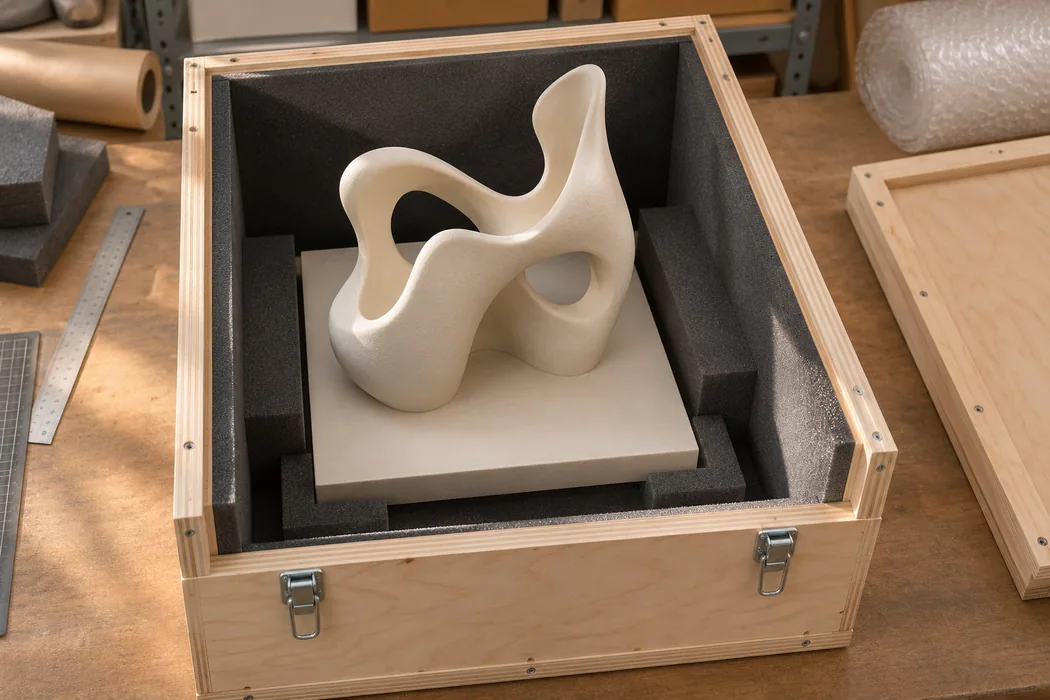
Sculptures and figurines
Identify the base, load-bearing areas and projecting parts of a sculpture. Use measurements and photographs to choose a protective box or custom crate.
Choosing the box, cushioning and supports
Place the item on a table and look at where it rests, where it might bend and which side carries the weight. Choose the container once you know how much space the protected item needs.
Protecting the surface
The first layer prevents rubbing. A soft sleeve helps protect a laptop, while a print needs a material suited to its ink. For gilding, loose pigment or delicate finishes, ask before placing any material against the surface.
Cushioning against impact
Cushioning separates the contents from the outer walls. For a bottle, use the complete shipping kit with its matching insert. Soft padding compresses under a heavy item, so take the weight into account when choosing supports.
Preventing movement
Dividers, shaped end caps and compartments hold items in their intended positions. Extra room in a box only helps when you use it to support the item on every side.
Before sealing the parcel
Test the lid
Bring the flaps together without sealing them. They should meet in the middle without pushing down on the contents. If a side bulges, open the box and rearrange the items or choose a different size.
Check the base and seams
While you can still see the contact points, check that the protective materials stay in place. Apply parcel tape to the centre seam and the two edge seams on both the base and the lid.
Prepare the label
Remove old labels and barcodes. Place the new shipping label on a single flat face. Keep the barcode away from corners and opening seams where it might fold or tear.
Measure the finished parcel
Weigh the closed box and measure its three outer dimensions at the widest points, including protrusions. For several parcels, record each weight and all three dimensions against the box number.
Calculate your parcel’s volumetric weight